
Cybersecurity Is No Longer Just an IT Problem
The digital economy has transformed how organizations operate, innovate, and engage with customers. While these advancements have accelerated business growth, they have also introduced new vulnerabilities that threat actors are eager to exploit.
From ransomware attacks and cloud misconfigurations to insider threats and supply chain compromises, enterprises face a growing number of risks that can disrupt operations and damage reputation. As a result, cybersecurity has become a strategic business priority that extends beyond the IT department and into the boardroom.
Modern organizations are recognizing that strong protection is not simply about preventing attacks—it is about building resilience, maintaining trust, and ensuring business continuity.
Understanding Cybersecurity in Today’s Enterprise Environment
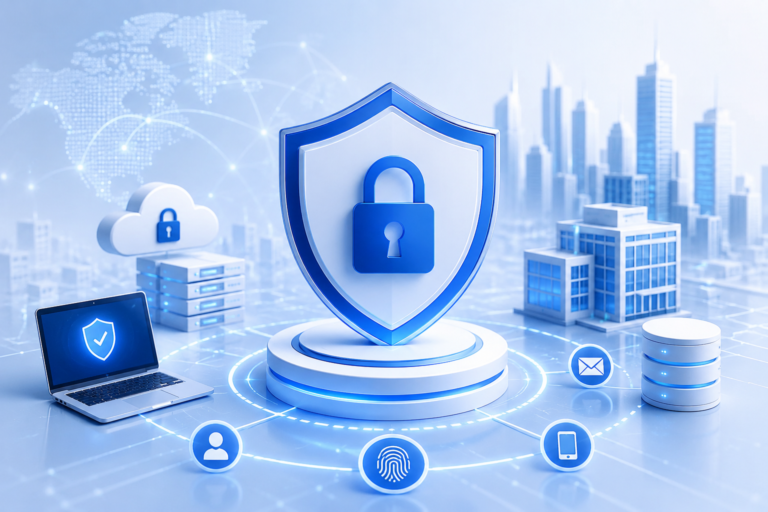
Cybersecurity refers to the technologies, processes, and policies designed to protect systems, networks, applications, and sensitive information from digital threats.
A modern security framework encompasses multiple domains, including:
- Information security
- Network security
- Cloud security
- Endpoint security
- Data security
- Identity and access management
- Threat detection and response
Together, these layers help organizations safeguard critical assets while supporting innovation and operational efficiency.
Why Traditional Security Models Are Failing
For many years, organizations relied on perimeter-based defenses. However, today’s business environment has evolved dramatically.
Expanding Digital Ecosystems
Employees, applications, and data now exist across cloud platforms, remote locations, and connected devices, making traditional boundaries less effective.
Increasing Threat Sophistication
Attackers are leveraging automation and artificial intelligence to identify vulnerabilities and launch highly targeted campaigns.
Tool Fragmentation
Many enterprises operate multiple standalone solutions that create visibility gaps and increase operational complexity.
Limited Security Resources
Security teams often struggle with alert fatigue and growing workloads, making it difficult to identify genuine threats quickly.
How Modern Enterprises Are Strengthening Their Security Posture
Leading organizations are adopting proactive strategies that improve visibility, control, and response capabilities.
Embracing Zero Trust Principles
Instead of assuming trust, every user, device, and application must be continuously verified before access is granted.
Enhancing Endpoint Protection
With employees working from multiple locations, endpoint security has become a critical defense layer against malware, ransomware, and unauthorized access.
Improving Security Visibility
Centralized monitoring platforms provide real-time insights into threats across the entire environment.
Strengthening Cloud Governance
Organizations are implementing stronger controls to secure cloud workloads, applications, and sensitive data.
Investing in Cyber Resilience
Beyond prevention, businesses are developing the ability to detect, respond to, and recover from incidents with minimal disruption.
Benefits of a Strong Security Posture
Organizations that prioritize cybersecurity gain significant advantages:
- Reduced exposure to cyber threats
- Faster threat detection and response
- Improved regulatory compliance
- Stronger customer and stakeholder trust
- Better protection of intellectual property
- Enhanced business continuity and operational resilience
These benefits help organizations remain competitive while reducing risk across the enterprise.
Challenges and Risks Organizations Still Face
Despite significant investments, enterprises continue to encounter several obstacles:
- Evolving attack techniques
- Third-party and supply chain risks
- Security skills shortages
- Complex regulatory requirements
- Growing cloud environments
- Managing large volumes of security data
Addressing these challenges requires continuous improvement and strategic planning.
The Future of Enterprise Protection
The next generation of enterprise defense will be shaped by several key trends:
AI-Powered Threat Detection
Artificial intelligence will improve the speed and accuracy of identifying suspicious activity.
Security Automation
Automated workflows will reduce response times and alleviate pressure on SOC teams.
Unified Security Platforms
Organizations will consolidate multiple tools into integrated ecosystems for greater efficiency.
Predictive Risk Intelligence
Advanced analytics will help organizations identify emerging risks before they become major incidents.
Greater Focus on Cyber Resilience
Businesses will increasingly prioritize rapid recovery and operational continuity alongside prevention.
Why Businesses Should Adopt AI-Driven Security Solutions
Modern attacks move faster than traditional defenses can respond. AI-driven solutions enable organizations to analyze large volumes of data, detect anomalies, and automate response actions in real time.
Key advantages include:
- Faster incident investigation
- Reduced false positives
- Improved operational efficiency
- Better visibility across environments
- Enhanced risk management
- Stronger overall cybersecurity outcomes
For enterprise leaders, adopting intelligent security technologies is becoming a strategic necessity rather than a future consideration.
Conclusion
As digital ecosystems continue to expand, organizations must rethink how they protect critical assets and manage emerging risks. Traditional approaches are no longer sufficient in an environment defined by sophisticated threats, distributed workforces, and complex infrastructures.
A modern cybersecurity strategy combines visibility, automation, resilience, and proactive defense to strengthen protection across the enterprise. Businesses that invest in advanced security capabilities today will be better positioned to manage risk, support innovation, and maintain trust in the years ahead.
Strengthen Your Security Posture with Velox Solutions
Cyber threats continue to evolve. Your defenses should evolve faster.
Velox Solutions Pvt. Ltd. empowers organizations with AI-powered security technologies designed to enhance visibility, accelerate response, and improve resilience. From Unified Endpoint Security Management (UESM) and XDR to Data Loss Prevention (DLP) and Vulnerability Management, our solutions help enterprises stay ahead of emerging threats.
Ready to strengthen your enterprise security posture?
✔ Book a personalized demo
✔ Consult with cybersecurity experts
✔ Discover AI-driven solutions tailored to your business
Contact Velox Solutions today and build a stronger, more resilient future.
Frequently Asked Questions
What is cybersecurity and why is it important for enterprises?
Cybersecurity protects systems, networks, applications, and data from cyber threats, helping organizations maintain business continuity and protect valuable assets.
How can enterprises improve their security posture?
Organizations can improve protection through Zero Trust strategies, endpoint protection, cloud governance, continuous monitoring, and AI-driven threat detection.
What is cyber resilience?
Cyber resilience is an organization’s ability to prepare for, respond to, and recover from cyber incidents while maintaining critical business operations.
Why is cloud security important for modern businesses?
Cloud security helps protect workloads, applications, and sensitive information stored across cloud environments from unauthorized access and cyber threats.
What role does AI play in enterprise security?
AI improves detection accuracy, automates investigations, reduces response times, and helps identify threats that may be missed by traditional tools.
How does endpoint security protect organizations?
Endpoint security safeguards laptops, servers, mobile devices, and other endpoints from malware, ransomware, and unauthorized access.
What are the biggest security challenges facing enterprises today?
Key challenges include ransomware, cloud misconfigurations, insider threats, supply chain attacks, and security skills shortages.
Why should businesses invest in modern cybersecurity solutions?
Modern solutions provide better visibility, faster response capabilities, stronger resilience, and improved protection against evolving threats.
Get your Organization Secure: Connect Us
Visit our alternative website: www.velox.co.in